Original free science fiction by M. Pax
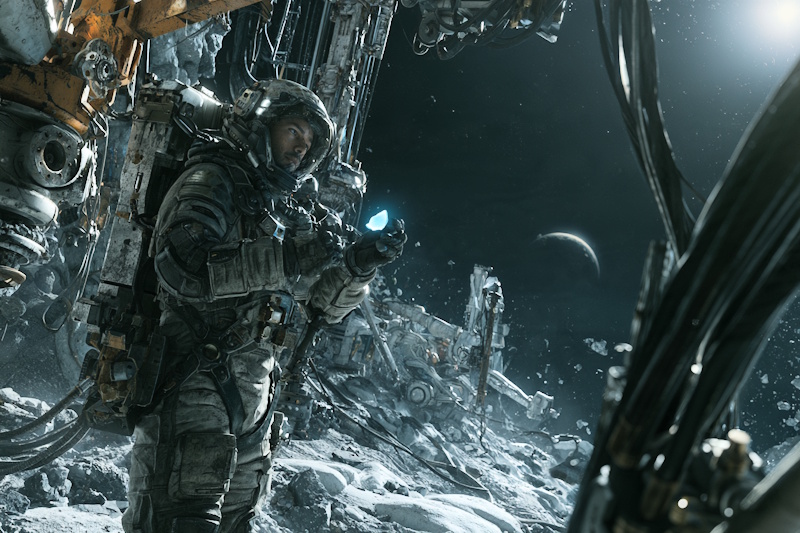
Twelve minutes until his last breath. The seconds cascaded on Jast’s faceplate, ticking down, crashing from his heart into his feet, spilling into the pit. On a world that had little in common with a habitable planet, he dug faster, churning up spadefuls of regolith and loose rock, loading them into the sorter’s mammoth bucket.
The finer particulates eddied beneath the floodlights, mimicking mist, blanketing all in powdery gray. Because of the lack of oxygen, the enormous machine sifting through the rock made no noise, but its vibrations shook Jast’s knees and governed the rhythm of his heart, jumping and skittering.
Sixty seconds vanished in a blur, barely giving his thoughts time to pound and lungs to fill. In eleven minutes, his grace period would end. He either found something of value or died. Quota had to be met every seventy-two hours.
Strac Industries gambled on hope, but wouldn’t tolerate the lack of results from the diggers. Management didn’t care the geological surveys declared asteroid 2173 Iocus a scrub pile with a twelve percent chance of striking a lode. If Jast didn’t hit pay dirt, he wouldn’t get another tank of oxygen and would be sent to the waste dump.
Worse, Mayanna would join him there. Would she stare into his soul when taking her last breath, see Radek waiting for her in the Afterlife, or peer into the vacancy of the void? His wife had wrenched his soul into bits at her end, rattling him with her terror. He didn’t want to witness that again.
Jast couldn’t let Mayanna down. She depended on him, not having suited up and worked for a week. The trash pile had her name on it if he didn’t produce and share his rations. Her friendship was the only thing that made this life bearable.
“Dig.” Desperation drove his arms. His back crunched, his heart pounded, and his brain kept screaming, “Dig. Dig. Don’t fucking give up.”
Minutes collapsed into split seconds. Time buckled, disappearing between one thrust of his shovel and the next. The soft yellow warning on his faceplate blared to blood orange. Six minutes. How were there only six minutes? A sob racked his shoulders, sending his spadeful of rock flying. His next hack into the regolith hit wrong. His spade slid sideways, refusing to sink in, encountering something more solid. He tried again. It wasn’t a fluke.
“Oh please!” He fell to his knees, clawing at the loose rock that made up 2173 Iocus and every S-type asteroid on which Strac had placed mining claims.
His fingers hit something solid, no longer able to dig. After eons of collisions, 2173 Iocus had coalesced from pebbles and chunks of rock. His thickly gloved palm brushed the detritus away and slid easily over a curved slab of what looked like metal. Finding the edges, he burrowed through the gravel, tunneling down three inches until the object released from the dirt.
What he held shone like metal. Metal! His crying gasps morphed into laughter.
Jast breathed deeply, knowing he would get more inhales. Gleaming under the floodlights, the curved box granted him a wish from the lifeless asteroid, the extension of life, of his and Mayanna’s. More time to figure out how to get out of this hellscape.
He jumped onto his aching feet and held the box over his head, waving it in the air, letting the floodlights catch its sheen. His discovery wasn’t a vein of ore, but the metal box had to be worth something.
The supervisor inside the sorter rose to her feet inside the cab, peering through the windshield of the enormous machine. She smiled at Jast’s find and pointed at the ladder leading up to her perch. More importantly, the timer on Jast’s faceplate reset to seventy-two hours.
Weighted boots kept him rooted to the asteroid, and Jast bounced in a skipping gait to the sorter. Clutching the box under one arm, he used the other and his feet to ascend a three-story ladder up to the cab. The hatch swung open to admit him and sealed shut once he was inside. The airlock hissed, and when the chamber properly pressurized, the green light on the panel shone as bright as the floodlights outside.
“Keep your helmet on. You’ll not be wasting my oxygen.” The supervisor, Micah Birch, greeted him. She led him to her office, to where the spectrometer was located. “In there.”
She lifted the lid of the ancient spectrometer that took up half of her office, setting the metal box into the analysis compartment. Shutting the lid, she powered on the massive machine. The spectrometer whirred and screeched, held together as flimsily as the sorter and the transport that carried Jast to this asteroid from another.
Beside the machine, there was a plastic desk and chairs in a sickly yellow. Jast and Micah sat on opposite sides.
“What did you find?” Folding her hands on top of her desk, Micah didn’t smile. She never did. Her freckles numbered high enough to darken her dusky complexion, and her coarse, unkempt hair cut to chin length gave her head a triangular shape.
Not removing his gloves either, ready to leave the second this transaction ended, Jast set his hands flat on his knees. “I don’t know. Some sort of metal box.”
“It’s definitely metal. Did you drop it into the pit? Like from your pocket?” Her tired brown eyes narrowed.
Jast’s laugh exploded, rough and cutting, making him cough. He paused to sip at his water ration, bowing his head to meet the hose rising from the neck of his suit. “Where would I have hidden it?” The cheap spacesuits Strac made him buy didn’t have pockets or pouches.
Micah pushed her chair back and peered under the desk at his boots, probably checking if he could hide anything there. “Very well.”
The lack of trust grated at Jast like sharp gravel. “How’s 2173 paying out?”
She curled her lips. “Two of your fellow seventy-niners hit pay dirt.”
Only two. Would the entire crew be laid to waste before moving to the next asteroid? “No bonanza?”
“None of your business, digger.”
Right. Heeding the warning, Jast waited for the spectrometer to finish. Would it find tungsten? Platinum? He and Mayanna would need a cushion to buy extra rations and make it to the next rock. Rhodium could get them out of here, could get them home. Alive.
When the analysis stopped, seven chimes dinged. He and Micah rose, approaching the spectrometer. She lifted the lid, and he retrieved the box, clutching it to his chest. They read over the results on the monitor—Micah cross-eyed, Jast leaning so close his faceplate bumped the screen.
“Brass.” Numbers and symbols scrolled across the spectrometer’s display. Micah tapped the screen to freeze the results when today’s rates appeared. “Price today is twenty air rations per ounce or ten water rations per ounce. The weight of your object is twelve ounces, which means it’s not solid brass.”
“I’m aware.” He could tell by the heft of it, it wasn’t. When he shook the box, something rattled inside.
“We’ll have to open it,” Micah declared. “What’s inside could be adding weight. I’ll not be paying you rations for trash, digger.”
Maybe something better lay inside the box. Jast examined the sides. Hinges along one edge led him to the faintest hint of an indentation on the opposite. His thickly gloved hands couldn’t feel or manipulate the fine latch.
“Twelve more asteroids will have been staked before you’re done.” Micah reached for the box, stopping before actually touching it. “May I? I’ll just open it. I promise not to touch the contents.”
Supervisors couldn’t be trusted, and Micah had the worst reputation Jast had run across, however, he needed the rations, and he wanted to know what was in the box. “One hand. Open it, then hands off and step away.”
“Agreed.” Her callused fingers fiddled until a tiny clink announced her success. She readied to flip the lid.
Jast shoved her hand away. “Not part of the deal.”
Her fingers twitched, yet she dropped her hands. “Sorry. I just want to see.”
“You use eyes to see, Supervisor.” Strac and its management were always out to shaft Jast and the other diggers. Not this time.
Huffing, she rolled her eyes. “Just get on with it.”
The thick gloves protecting Jast’s hands from the harshness of space did him no favors. He clumsily slapped over the box twice before he could pick it up and tip it so the lid sprang open and spilled out its secrets.
Six translucent pebbles in amber, red, green, clear, and two shades of blue lay inside. Smooth and thin as coins, they were transparent, with minuscule bubbles suspended within.
Micah took out a pocket analyzer and waved it over the stones, her nose millimeters away. “Glass. Can’t give you any credits for those. Take those out, and let’s weigh the box again.”
Jast did as she asked, spilling the glass into a pile on the table.
“Eleven point five ounces. Not too much of a weight difference,” Micah said. “How do you want your credits?”
“Two new hydrogen garments, then split the rest between water and air.” He pointed at the small pile of glass. “I’ll take those with me.” His gloves wouldn’t let him pick them up. He tried in vain until Micah chortled.
She snorted. “You’re taking up too many of my minutes. Let me sweep them into a sack and tie it to your belt.”
More time with her meant she’d find a way to cheat him. “Sweep them into the sack you offer, for free, then show me. Attach it to my arm.”
Her tongue smoothed over her teeth. “The bag is going to flop around and get in your way on your arm.”
If he had to dig more today, he would agree with her. He was glad his shift was over. The last thing he wanted was to agree with a supervisor. “I can handle it.”
“Very well.” She did as he requested, using her forearm to sweep the objects into a sack made from discarded hydrogen garments. She held the bag open. When Jast grunted, she placed the two new hydrogen suits on top, tied up the bag, and fastened it to his arm with two pieces of duct tape.
“Now get out, you slag-sucking scut bottom.”
Scut bottom, indeed. If he swore like that out loud, he’d be sent out to the waste pile. “Thank you, Supervisor.”
He returned to the airlock and waited for the cycle to complete before unlatching the outer door and hopping down to the surface. Using that skipping gait, Jast made his way to Camp Slag.
On every asteroid, camp had the same name and layout. Sturdy domes made up the entrance and communal spaces, their clear walls lined with plants and crops. Between them, inflatable barracks housed the miners.
Water in the walls protected from radiation while the vital fluid recycled. Those who ran out of water rations often drank from the walls, the unfiltered stuff. It changed them, that and the radiation exposure. Their manic states led to frequent hits of pay dirt, so the radies were tolerated, but Jast avoided them. His life was insane enough.
He entered the first dome. Gases, sprays, and powders decontaminated his suit. When the process finished, he hobbled into the next, the locker room. Removing his spacesuit, he checked each piece for weaknesses before hanging it carefully in his locker, his gaze flickering over Mayanna’s unused suit. Loss was a hard grief and harder under Strac. He had barely survived the loss of his family, so she understood.
Sighing, he removed his old hydrogen garment—what every miner wore under a spacesuit and what was worn around camp. The garment changed its gray color as it absorbed radiation, and his was almost totally green. He slipped on the new garment, which scratched against his pale and dry skin, skin that hadn’t known warmth from the sun in over a decade. He opened Mayanna’s locker and hung the second new garment next to her suit.
Carefully detaching the sack of pebbles from his suit, he clutched it against his chest. Maybe the colored bits of glass would give Mayanna something else to think about besides her sorrows, besides Radek joining the waste pile where he would gaze into the ether for eternity, never rotting, never becoming dirt, never receding into memory.
Jast sealed both lockers, then grabbed nutricakes from the galley on the way to the pod he shared with Mayanna. The cakes didn’t require credits. Other foods did.
Unzipping the door, he didn’t need to yell or search for her. Their pod accommodated their two cots set up as bunk beds, a couch with a table, and storage lockers. A filmy window offered a view neither one of them ever took advantage of. “I brought dinner, Mayanna.”
Her dark coils spilled over the pillow of her cot, and her watery eyes, the color of rain clouds, stared up at the ceiling. She had never been the delicate type, neither in stature nor spirit, but losing Radek had deflated her. He had become part of Strac sixteen months ago, and Mayanna had fallen hard. Radek had never left her side from the moment they met, stirring aches in Jast for his wife and daughter.
Mayanna didn’t appear to have moved since he had left this morning. Perching on the edge of her cot, he patted her leg and placed a nutricake in her hand.
“Hit pay dirt,” he said. “Found brass in the slag. You’ll have a new hydrogen garment when you need it. It’s hanging in your locker, and we have air and water to last us a month.”
A tear trickled down her temple, racing for her curls. She swiped at her lingering grief and sniffed with her tiny nose. “There’s no pay dirt without Radek.”
“There is. We need out. Out is our mother lode.”
“And leave him here?”
“We don’t have a choice. He’s the property of Strac.”
“As are we. There’s no point to any of this, Jast. We’ll end up just like Radek.”
“Sit up and eat. OK? We’ll figure something out.” Years ago when his wife and child had died in a storm on the homeworld, literally ripped from his hands, he’d stood on a precipice ready to jump, ready to join them. Mayanna talked him out of it, promising him a better life in the stars, promising he would forget.
He often did. This life had him thinking about little else than the next tank of air, the next sip of water. Life was more precious out here, and the minutes he had spent with love meant more when he had a moment to recall them. Love didn’t exist out here except in a brotherly way with Mayanna.
Her fingers hadn’t lost their strength, picking apart the cake. None of it made it into her mouth. Shoulders rounded, she looked as though she were about to melt into her bunk. “I don’t want to mine anymore. I want something else. Don’t you think we deserve better?” She blinked and glanced up, seeking answers in his face.
“I do. We deserve hope and love. Sunshine. Grass under our feet. Air that doesn’t smell bad.” He had missed those things more than he thought.
“How do we get those?” She raked her hand through her curls. Her scalp flaked from a lack of care.
“We love each other. There’s that. We do have love.”
“Not the flutters in the pits of our stomachs kind.”
“Love is strength. Even this kind.”
“It’s not enough, Jast.”
“Don’t give up, and when the opportunity comes up, we snatch it.”
“That’s too ambiguous.”
“I’ll listen if you’ve something better.”
She popped a crumb of nutricake into her mouth then another. At least she was eating. He placed the sack of glass on her lap.
“These were in the brass box I dug up today. Take a peek.”
She shook the items out onto her leg. “Glass rocks?” Peering at the cerulean colored pebble, she held it up to the light. “Do you remember sea glass? These remind me of sea glass.” She frowned. “I miss the sea. I miss a blue sky.”
“View the galaxy through that, and it’ll remind you home is possible.”
“I don’t want the reminder, and I want no more of your rations either. I’m going to refuse them from now on.”
The desire to die, he understood, but he’d not survive a week without her. Death was inevitable, but he didn’t want his last seconds spent in this hellscape. Maybe they couldn’t live better, but they could die better. Elbows on his knees, resting his head in his hands, he rubbed at his temples. “I won’t let you willingly go to the dump. You saved my life once. Let me return the favor.”
“For what purpose?” She handed him the blue pebble.
He caressed the smooth glass, feeling something other than stress and despair. “A bit of the sea made it to us on an asteroid far from home. So very, very far from home. How did it get here? Miracles, Mayanna. The universe is full of them.”
She placed another piece of nutricake in her mouth. “How’d a brass box of sea glass get embedded in asteroid debris?”
“It’s a great mystery. But it got here. If so, we can get away from Strac.” He squinted at the glass stone. “Maybe the pyramid builders left these here, you know, those ancient alien theories.”
For the first time since the man she loved hadn’t returned from the gravel hole, she laughed, rasping like a bark, yet it hit Jast’s ear as a beautiful aria.
“You thinking aliens might save us?” She whacked Jast playfully in the chest.
“I’ll take hope in whatever form it comes.” He gave her back the blue piece of seaglass. “Home is still out there. This reminds us that it is, and we’ll find our way back.”
“Miracles?”
“ You’re holding proof they happen. Next time a delivery comes in, we pay for passage to the nearest colony and take our chances.”
“We’ll need money and a large stockpile of air and water rations. Then we probably end up back here or worse. But let’s try.”
“We have to try. I’d rather die free than as property, Mayanna. That’s enough hope for me.”
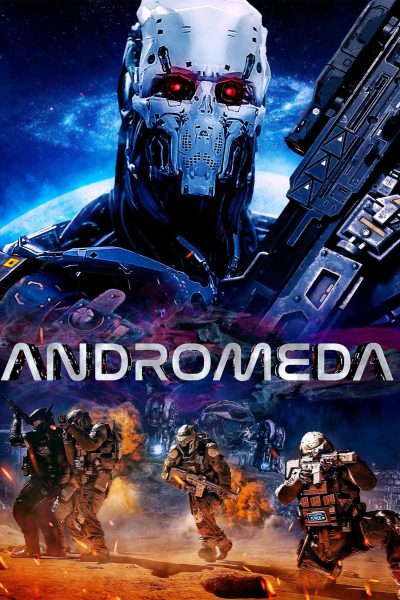 Where to start with this one…
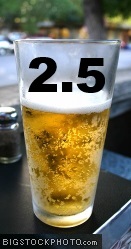 Because it made me laugh several times, fair acting, and decent special effects, Andromeda earns a 2.5 beer rating. There are some interesting ideas and decent visuals here, but they’re buried under inconsistent worldbuilding, unanswered questions, and uneven pacing. Fair warning: you might want more beers before the credits roll. Streaming for free on YouTube.